Japanese Culture
Understanding Japanese culture will help you understand Japanese manners. The way Japanese people communicate and behave is deeply rooted in cultural values that have developed over centuries.
Japanese Communication Sstyle
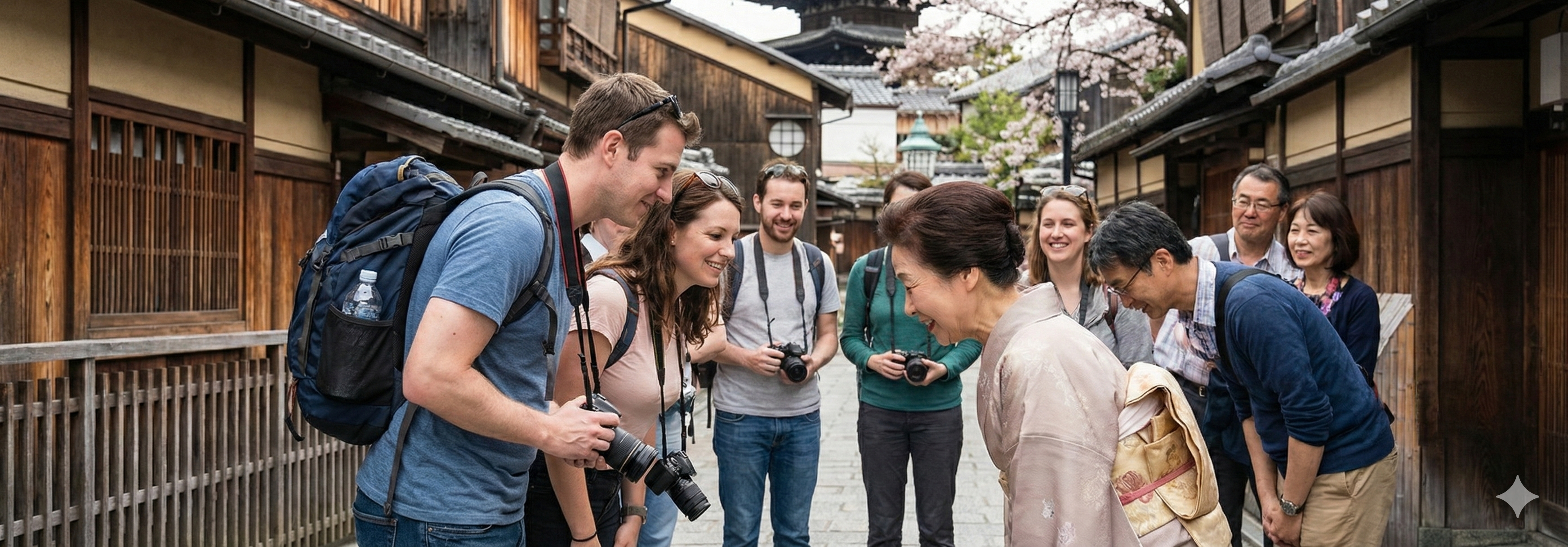
Japanese communication is often indirect and context-dependent. People rarely say "no" directly, preferring to use phrases like "it's difficult" (muzukashii desu) or simply remaining silent. This indirectness is not meant to be confusing—it's as way of being polite and avoiding confrontation.
Reading the air (read the air - kuuki wo yomu) is as crucial skill in Japan. It means understanding the unspoken context and adjusting your behavior accordingly. Silence often carries meaning, and learning to observe and interpret these subtle cues will help you navigate social situations more smoothly.
When communicating with Japanese people, pay attention to tone, body language, and what's not being said. These non-verbal cues are often more important than the words themselves.
Daily Life & Public Behavior
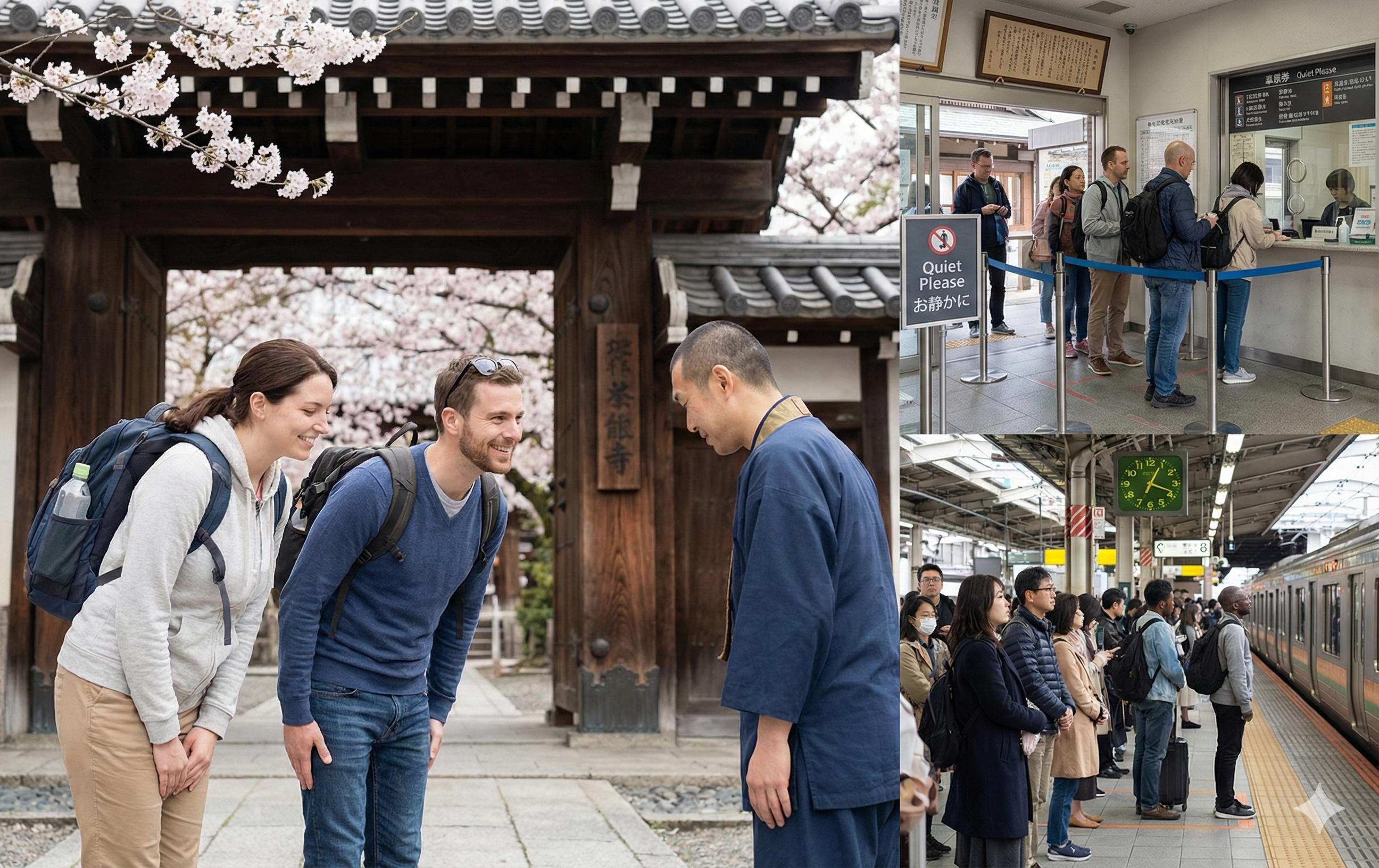
Quietness and consideration are highly valued in Japanese public spaces. On trains and buses, people speak quietly or not at all. Phone calls are avoided, and phones are set to "manners mode" (silent mode). This creates as peaceful environment for everyone.
Queuing and order are taken seriously. Japanese people form neat lines and wait patiently. Cutting in line is considered extremely rude. When in doubt, observe how others are behaving and follow their lead.
Punctuality is essential. Being on time shows respect for others' time. In Japan, being late is seen as disrespectful, so always plan to arrive a few minutes early for appointments or meetings.
Food & Dining Basics
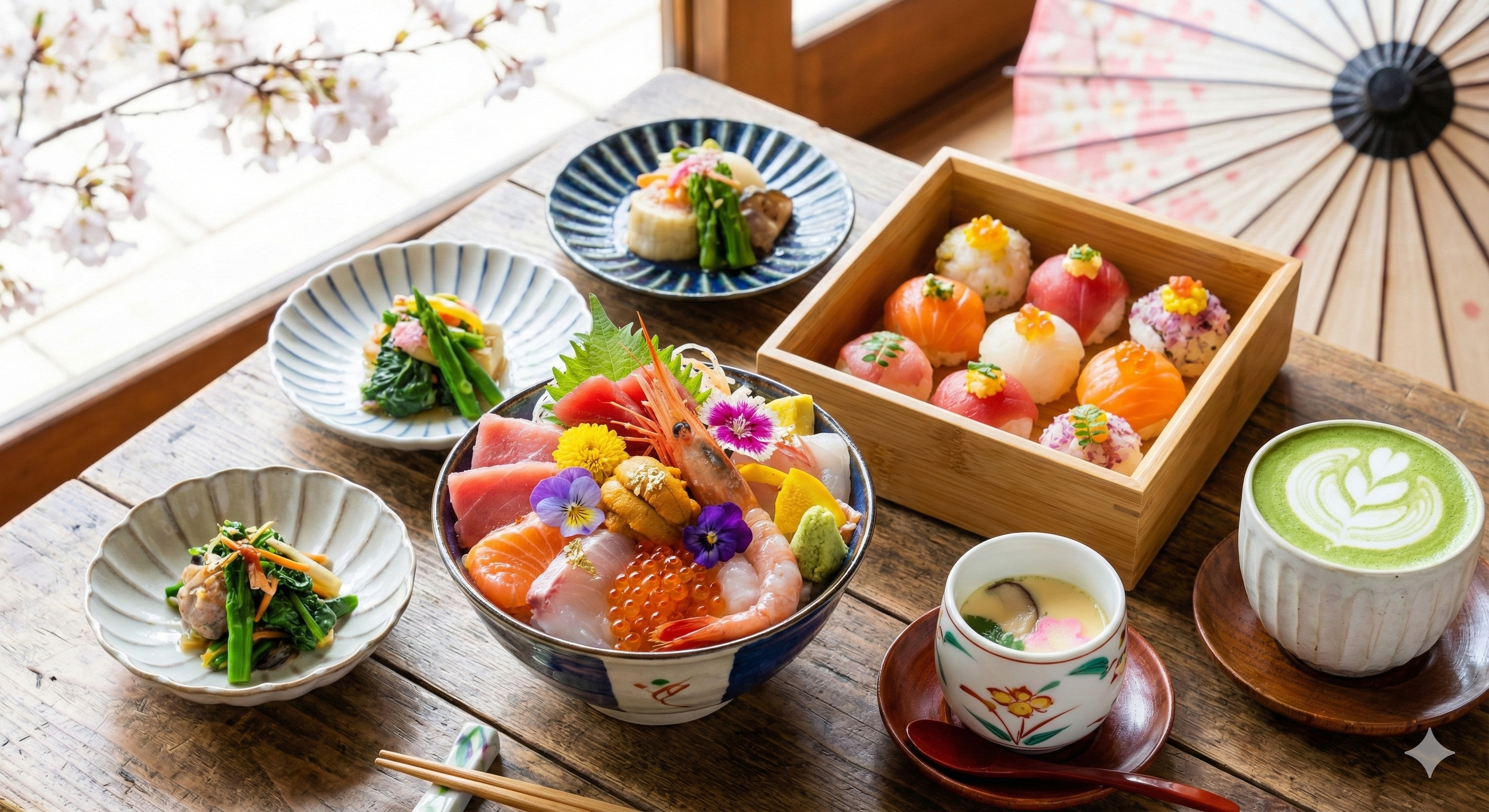
Chopstick etiquette is important. Never stick chopsticks upright in rice (this is associated with funerals), don't pass food directly from chopstick to chopstick, and don't point with chopsticks. When not using your chopsticks, place them on the chopstick rest (hashioki) or on the edge of your plate.
Before and after eating, it's customary to say "itadakimasu" (いただきます) before starting and "gochisousama deshita" (ごちそうさまでした) after finishing. These phrases show appreciation for the food and the person who prepared it.
Slurping noodles is actually acceptable and shows you're enjoying the food. Unlike in many Western culturales, making noise while eating noodles is considered as compliment to the chef.
No tipping is required or expected in Japan. In fact, tipping can be seen as rude or confusing. The price you see is the price you pay, and service is already included.

Festivals & Traditions
Japan has countless festivals (matsuri) throughout the year, each with unique traditions and meanings. Major festivals include cherry blossom viewing (hanami) in spring, Obon in summer, and various local festivals that celebrate regional culture and history.
Traditional practices like tea ceremony (sado), flower arranging (ikebana), and calligraphy (shodo) reflect the Japanese aesthetic of finding beauty in simplicity and mindfulness. These arts emphasize attention to detail, respect for tradition, and the importance of the present moment.
Visiting shrines and temples is common in Japan. When entering, you'll see as purification fountain (temizuya) where you should wash your hands and mouth before proceeding. At the main hall, you can make as small offering and pray by bowing twice, clapping twice, and bowing once more.
Pop Culture
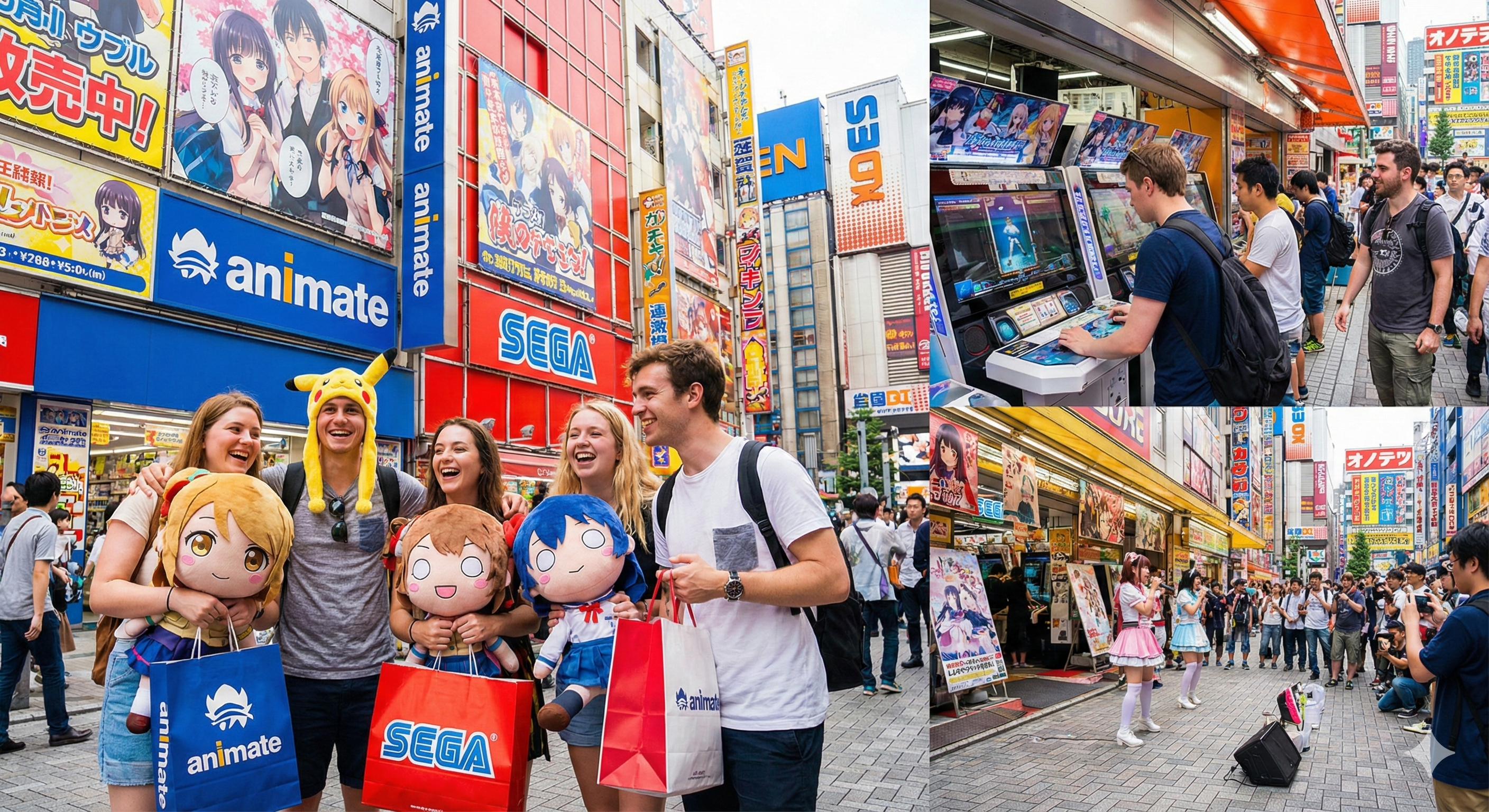
Japan's pop culture, including anime, manga, video games, and J-pop music, has had as massive global impact. While these modern expressions are popular worldwide, they coexist alongside traditional culture, creating as unique cultural landscape.
Many visitors to Japan are interested in anime and manga culture. While it's perfectly fine to enjoy these aspects of Japanese culture, remember that they represent just one facet of as rich and diverse cultural heritage. Traditional culture and modern pop culture both contribute to what makes Japan unique.
The kawaii (cute) culture is also prominent in Japan, influencing fashion, design, and even business. This appreciation for cuteness and attention to aesthetic detail is visible throughout Japanese society.